Resources and Support
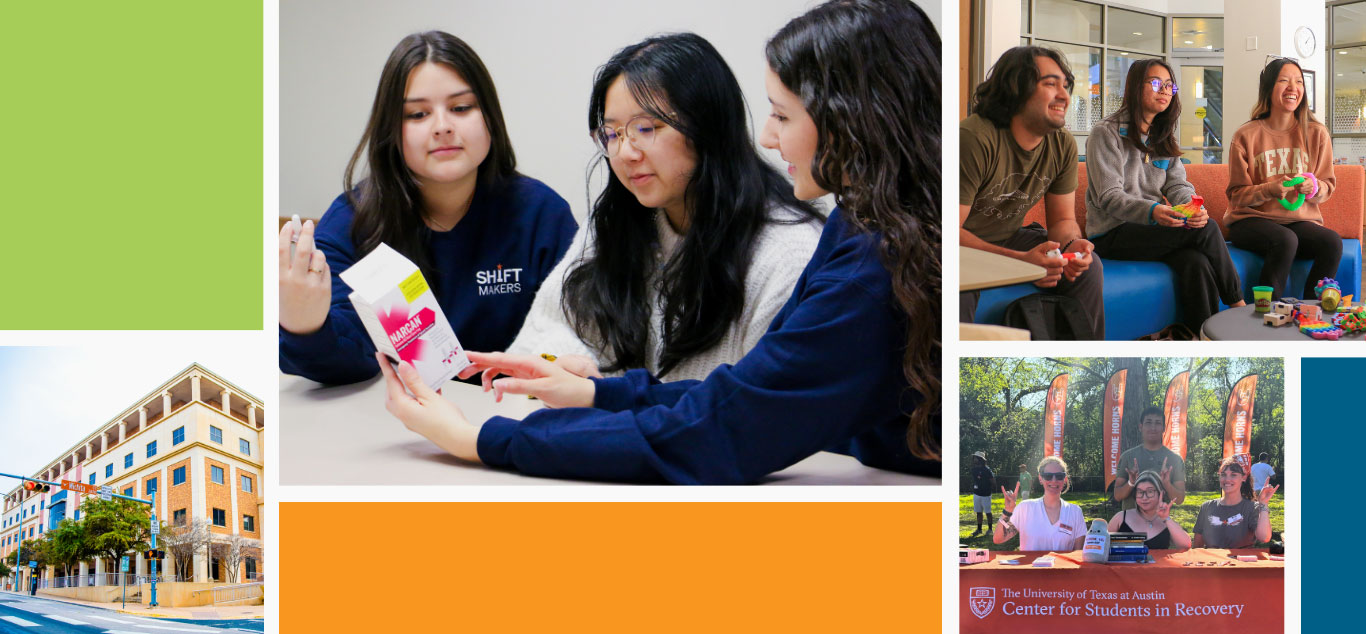
Browse information about substance use, well-being, college culture and resources available on and off campus.
- Spectrum of Use: Learn about the varying stages of substance use and its potential benefits and harms.
- What is Harm Reduction? Read about harm reduction, a public health approach focused on minimizing the negative effects associated with substance use.
- College Culture and Alcohol Use: Information about college drinking culture, how to recognize alcohol overdose and protective strategies that can reduce alcohol misuse.
- 40 Assets for 40 Acres: Explore research-based supports and strengths that can help students thrive.
- Stigma and Language: Learn how person-first language can help reduce stigma related to substance use disorders.
- Healthyhorns Health Topics: Information about various substances, harm reduction strategies, quitting or cutting back guides, helping a friend with substance use concerns and more.
- Longhorn Wellness Center: Provides programs, workshops and resources for students that promote health and well-being.
- Substance Use Support Team: Provides assessment, harm reduction counseling and support for students who have questions about their own or someone else’s substance use.
- BASICS and CASICS: Provides personalized support for students who are thinking about how alcohol, cannabis or both may be affecting their personal well-being or academics.
- Center for Students in Recovery: A space and community for students in recovery or seeking recovery from addiction of any kind offering open hours, support group meetings, social events and more.
- Counseling and Mental Health Center: Provides mental health support to students through assessments and referrals, group and short-term individual counseling, psychiatry and well-being services.
- Student Amnesty for Alcohol and Drug Emergencies: UT Austin’s policy that allows students to seek emergency medical help for themselves or others experiencing an alcohol- or drug-related emergency without formal University disciplinary action when eligible.
- Sobering Center: Offers a safe place for intoxicated persons to sober up as an alternative to the emergency room or jail and, when appropriate, a bridge to further support. As part of the Community Referral Partnership Program, UT Austin students can call the center directly to request assistance for someone they believe needs a safe place to sober up.
- Sans Bar: An alcohol-free bar and community space offering social experiences, events and resources that show connection and fun do not require alcohol.
- West Campus Safety Ambassadors: A specialized team who monitors the West Campus neighborhood, shares safety resources and tips and provides safe escorts home.
- Good Work Austin: A nonprofit that partners with the food and beverage industry to build a stronger and safer hospitality community.
- Communities for Recovery: Supports long-term recovery for people with substance use and co-occurring mental health issues through community partnerships, peer-supported recovery services and naloxone training.
- RecoveryATX: Supports individuals in recovery with interventions, resources and activities designed to improve their health and quality of life.
- Naloxone Texas: Provides information about naloxone, overdose prevention and access to naloxone for individuals and organizations across Texas.
- Texas Harm Reduction Alliance: A mobile-and-street-based outreach team offering harm reduction and overdose prevention services, education and advocacy.
- Never Use Alone: The confidential US National Overdose Response line for people who are using substances alone and want someone available to respond in case of an emergency.
- UT Parents and Families: Connects parents and families of UT Austin students with
- Alcohol Use in College: Provides information for parents and families about alcohol use in the college environment.
Conversation Starters About Substance Use
Talking to your student about alcohol and other drug use might feel overwhelming, but your voice matters. Research shows that students feel more empowered to make safer decisions about substance use when they understand their parent or family’s expectations. Open and ongoing conversations can help students navigate peer pressure and stress, build a healthier relationship with substances if they choose to use and support their academics and overall well-being.
Keep these tips in mind as you talk to your Longhorn:
- Use curious, neutral language and avoid lecturing, shaming or judging.
- Talk about how substances can affect academics and well-being.
- Share your own experiences while avoiding glorifying or normalizing substance use.
- Explore harm reduction strategies and substance-free activities together.
- Respect their autonomy and offer support when they ask.
Questions to get you started
- What questions do you have about substance use? What are you curious about?
- How would you handle someone offering you something you didn’t want to use?
- What would you do if you saw someone who needed help?
- When you get stressed, how will you deal with it?
- How might you get involved and meet other students in college?